 Coming to YouTube
Build 13 · One enemy, a hundred enemies
One pixel art enemy, 100 game-ready variants
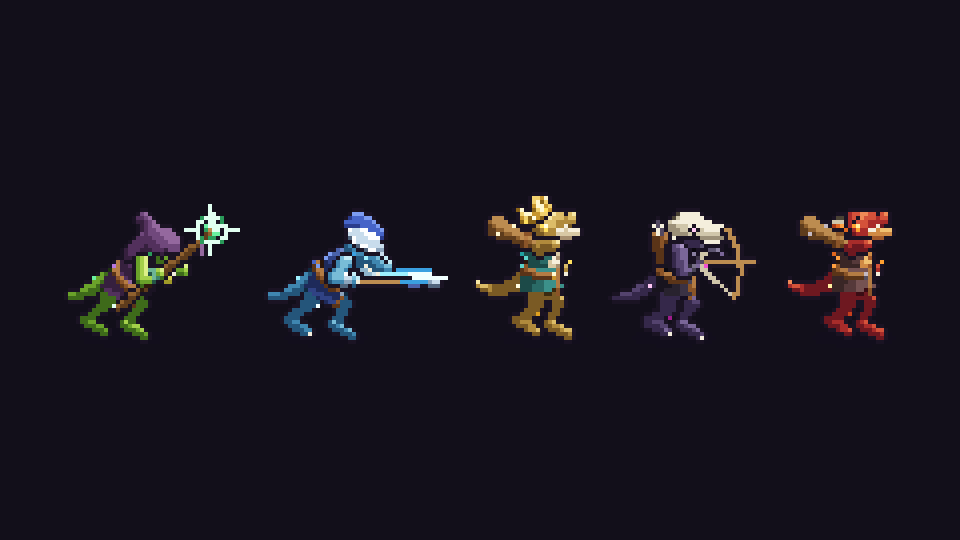
One side-view kobold grunt: 5 heads, 4 weapons and 5 elements. SpriteRelay's own export features turned one master file into 100 real .aseprite enemies, each with its sheet, animation tags, timings and hitboxes.
- AI agent
- Claude
- Built with
- SpriteRelay CLI
- Files
- 1
- Frames
- 43
- Variants
- 100 files
Play the export
The real sprite sheet, playing in your browser
This player reads the exported sheet and its JSON: frame rectangles, timings and tags, exactly as a game engine would.
Layers
Palette
Tags
Tag data
What makes it work
Inside the file
- A 64×64 indexed master with every head and weapon as its own layer, and a 48-colour palette in fixed slots.
- 20 gear files cut from the master with ordinary patch operations, then one palette_variants call each: 100 files.
- Game data lives in the file: hitbox and active frames on melee attacks, spawn frame and muzzle on ranged ones, a walk speed that keeps the feet planted.
- The same palette_variants and atlas exports work on any indexed sprite you already own.
How it was built
Step by step
- The masterBuilt step by step with sprite_patch, then exported and compared with the design after every step.
- 20 gear filesEach is the master with the other heads, weapons, frames, tags and slices removed.
- 100 variantsOne palette_variants export per gear file, with five element palettes as .gpl files.
- ExportsA sheet and JSON per enemy, attack GIFs, and one atlas per element.
The files
What was built
| File | Canvas | Frames | Layers | Tags | Slices | Size |
|---|---|---|---|---|---|---|
One enemy, a hundred enemieskobold-master.aseprite | 64×64 indexed | 43 | 17 | 8 | 6 | 74 KB |
Read from each file's own record (SpriteRelay's file summary of the final .aseprite where one was taken).
How it was checked
- Every build step, every layer, every gear file and all 100 variants match the design pixel for pixel.
- SpriteRelay's own audits: the master and sampled variants are valid, with no warnings and no duplicate frames.
- Colour-blind separation checked between the five elements.
Labels and honesty notes
- The cave in the videos is a prop drawn for the video and labelled as one.
- We found an atlas limitation along the way: packing indexed sprites with different palettes into one atlas collapses them to one palette, so the atlases here are one per element.
Watch
The videos
Every frame on screen is cut from the file's real exports.
Coming to YouTube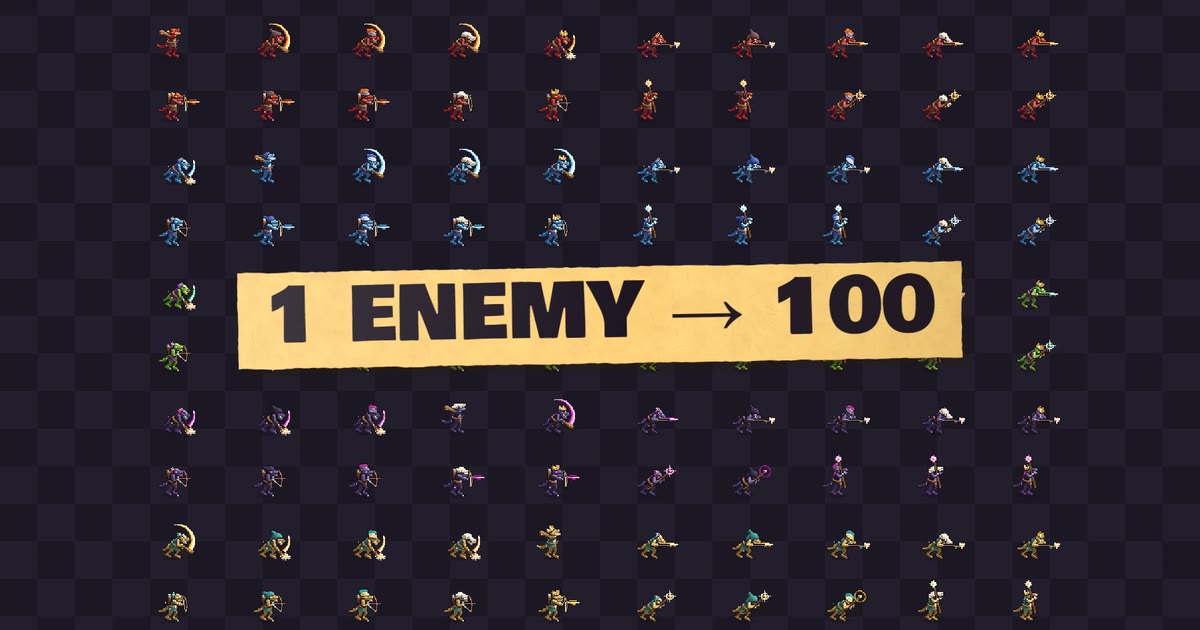 Coming to YouTube
Do this with your own sprites
Every build here was made through SpriteRelay CLI.
Your assistant inspects, patches, previews and exports real .aseprite files, and nothing reaches your project until you commit.
Keep exploring
More builds
 Playable
One sprite, eight directions
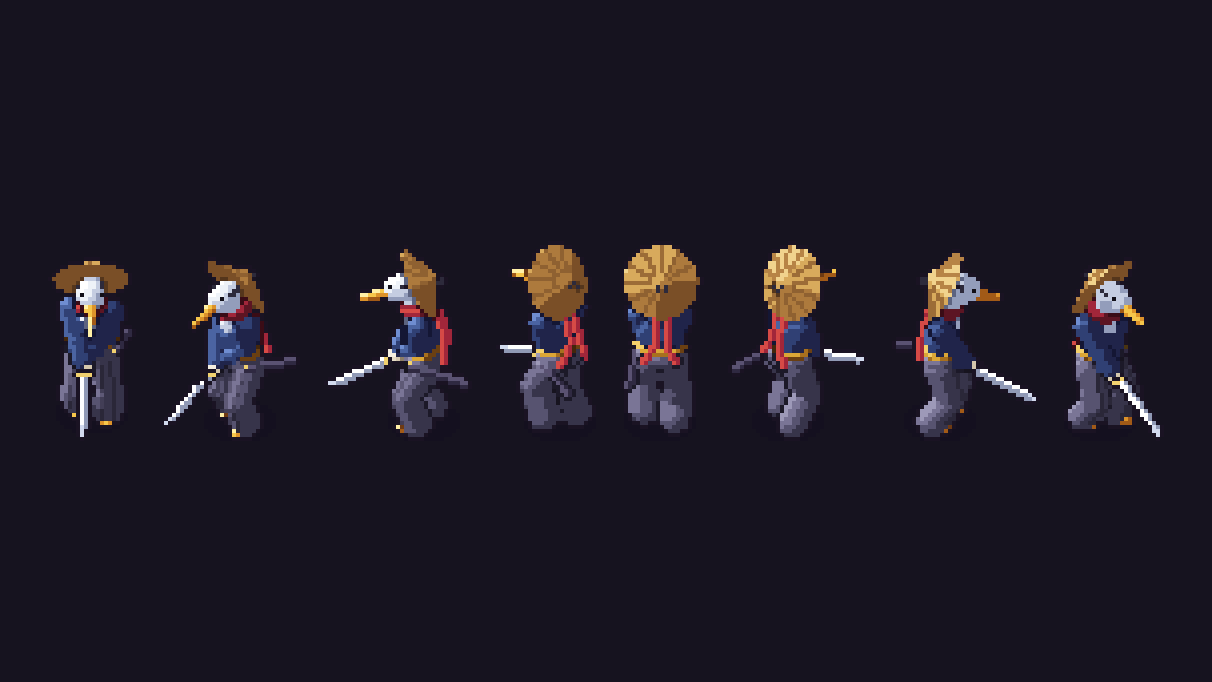
A 64×64 heron swordsman in all 8 directions: idle, walk, attack, hurt and death, 304 frames in one Aseprite file with tags, timings and hitboxes.
Characters
The Halloween pack
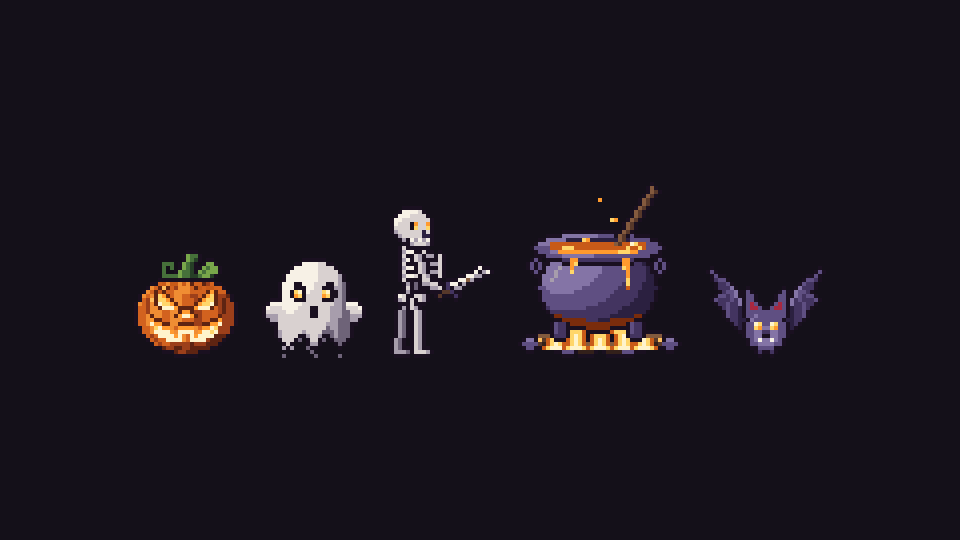
Eight game-ready Halloween sprites (ghost, skeleton, bat, spider, cauldron and more) sharing one palette, with four colourways from palette_variants.
Characters · Palette variants
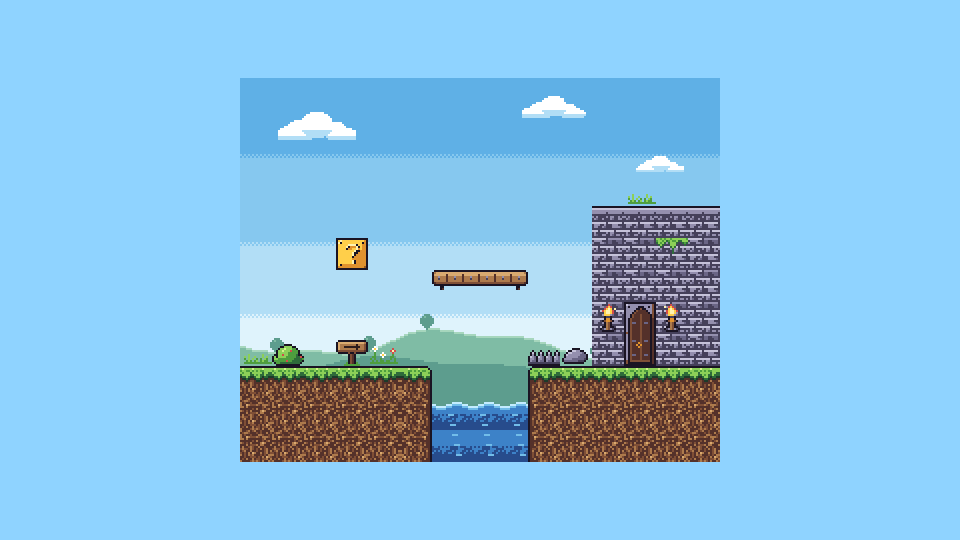
Build a tiny game world
A 16×16 platformer tileset and level on real tilemap layers, a knight hero, three enemies, six pickups and a golem boss, all in one shared palette.
Characters · Worlds & tilemaps